
5 years is a long time in terms of the internet.
Let’s assume that you have been on the it during this period. Chances are quite high that you are on Facebook together with the other 1.32 Billion monthly users. Chances are also that you have followed the issues of online privacy related to the NSA spying scandal.
For more than a year it is therefore understandable that a growing part of the wider public has begun to think about alternatives to publishing all their personal details on Facebook.
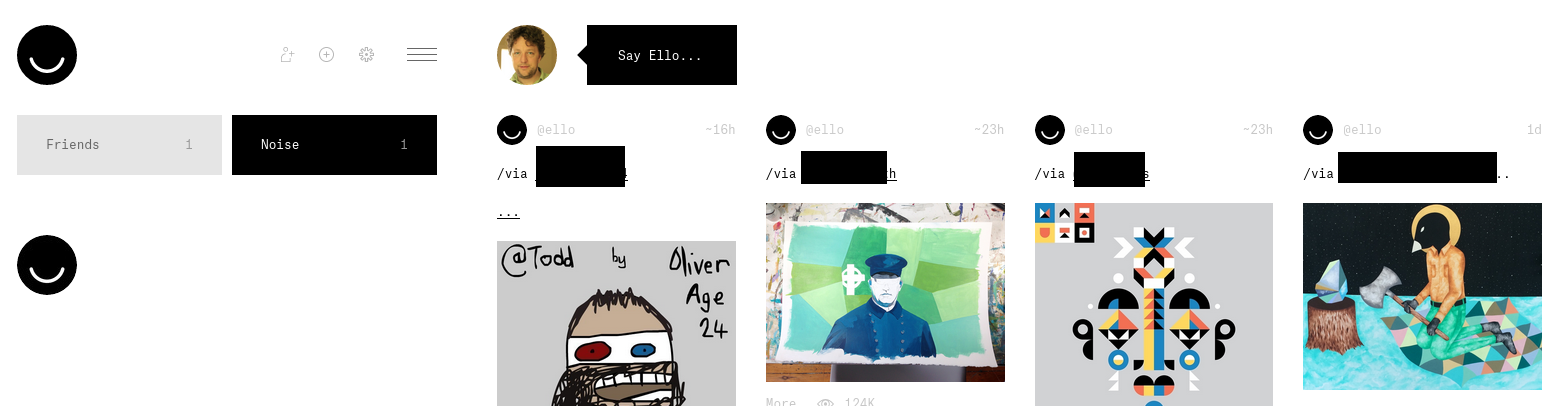
However, it is rather surprising that suddenly Ello.co is celebrated as the great alternative to Facebook. So far what is known about Ello is that:
- It has received USD 435k in funding supposedly without having a working business plan in place.
- Its servers are placed in the United States (Ashburn, Virginia) and so is it’s management, so that NSA and other agencies will have the same access as they have to srvices such as Gmail and Faceook.
- Ello is not open source, so one cannot check what’s really going on: “… code for the ello.co product, there will likely be things that come out of it over time — it’s a pretty hard business model to open source stuff that you haven’t completed yet.”
You may wonder why the last point should be important to anyone but eccentric computer nerds. I can see three main reasons why it is important that the next social network is open source:
- The selection of what goes into the news stream is made by the software that runs the social network. With millions or Billions of users, adjusting the algorithm for what goes into every users stream is the ultimate thought control. Facebook has admitted to using this for minor experiments, but potentially it can also be used for political purposes (not spreading certain news, spreading some news more than others, etc.). If the source code is open, everyone can check what exactly determines why one story is being shown to you rather than another.
- Because the people running a specific site can make strange, dictatorial decisions that the majority of users might not agree with. It can seem at times that Facebook users confuse Facebook with a democratic state when they create campaigns for the closing of a certain site or against the expulsion of user X. Facebook is not that. it is a commercial company with its own interests. There is no problem with sites running social networks being that, as long as the users have the freedom to take all their data and move to another server with another philosophy and continue from there, with all their old friends as if nothing had happened. If the source code is open users who disagree with a change or with a administrative decision can just create their own server.
- An open source social network can be programmed to work decentralized/federated so that users who are connected to one server can connect to users on another server. The servers can be run by different economic entities, so that the end user only connects to a server that he/she trusts and no direct connection from her/his personal computer to any server will be detectable.
Ello the only alternative?
One good explanation for why Ello.co suddenly is so popular could have been that it is the only alternative to Facebook — except it is not.
While the general public has only been aware of the issues of Facebook possibly spying on its users for a little over a year, developers have suspected this for much longer. I myself was talking about the need to prepare for this possibility at conference about social networking in Managua, Nicaragua (spring 2012) and about the possibilities that lie in controlling the news stream on Facebook (spring 2014).
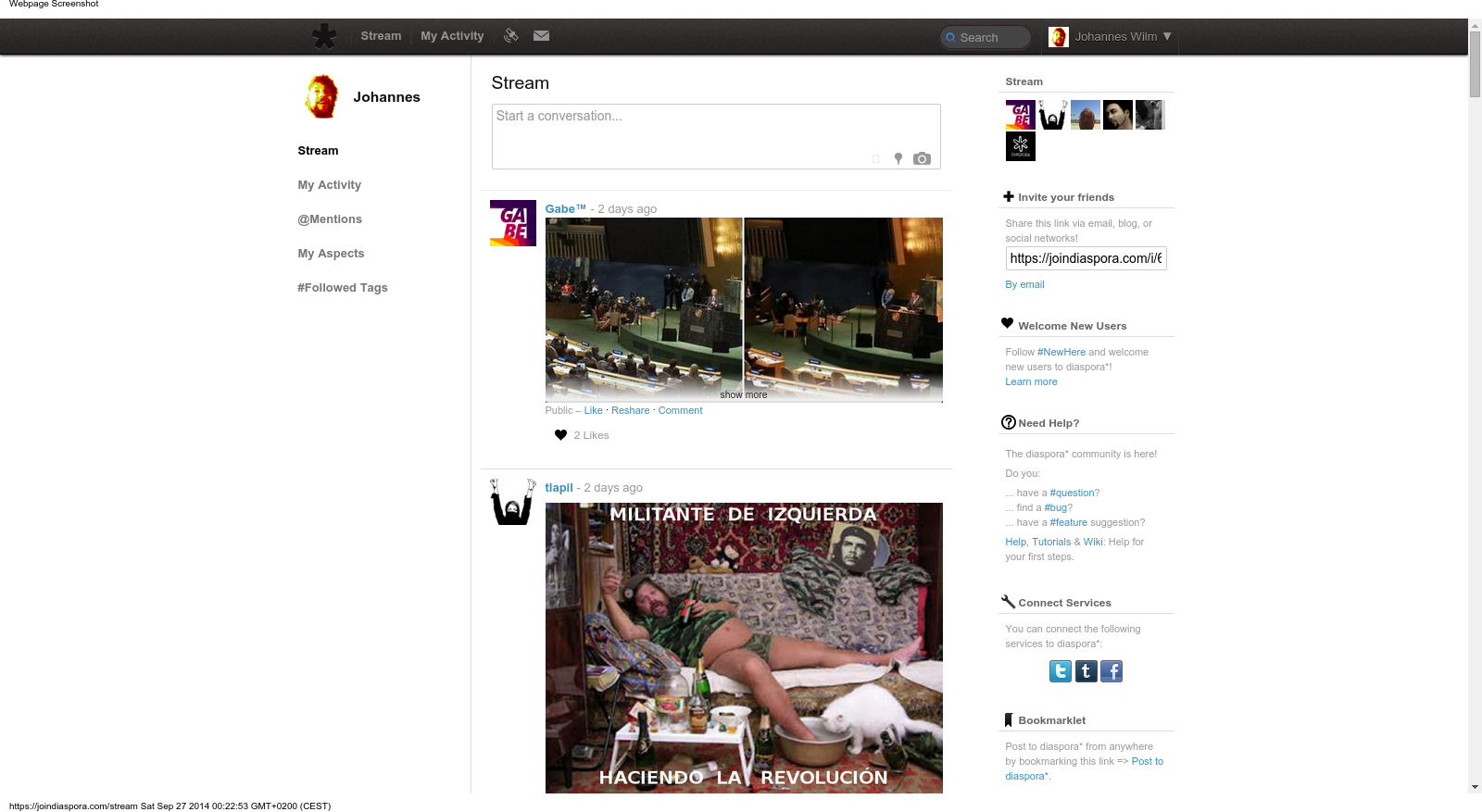
Other developers have gone much further than me and have actually programmed social networks from the ground up. Developers have been building them for years, and several of them are built to talk to work in a decentralized/federated way with different instances of one-another with an open source code model behind them. Take for example Friendica or Diaspora or the the upcoming Pump.io. They are ready to be used once users get fed up with Facebook.
Why then Ello?
One can come up with many conspiracy theories on why the media suddenly reports on Ell being the Facebook killer. Chances are the main reason is that journalists haven’t really done their research and a snowball effect is make the “news” of Ello’s arrival spread far and fast.
Unfortunately the consequences of yet another closed site, such as Ello, taking over after Facebook could mean a set back the development of democratic forms of communication for another decade.


Leave a Reply