A few months ago I took an Austrian girl on a tour of the old German Democratic Republic (GDR). Part of the point was to show that the view of East German history differed quite a bit depending on where one was. Now unfortunately we did not meet all that many people with a positive view of the previous regime, and so i, who usually count myself as quite opposed to Stalinism, had to step in and try to show some of the positive points of the GDR as well.
One of these is without question that Western Germany, the Federal Republic of Germany (FRG), has media that is at least as false and brainwashing as that of the GDR, and by following both one could therefore escape most of the propaganda.
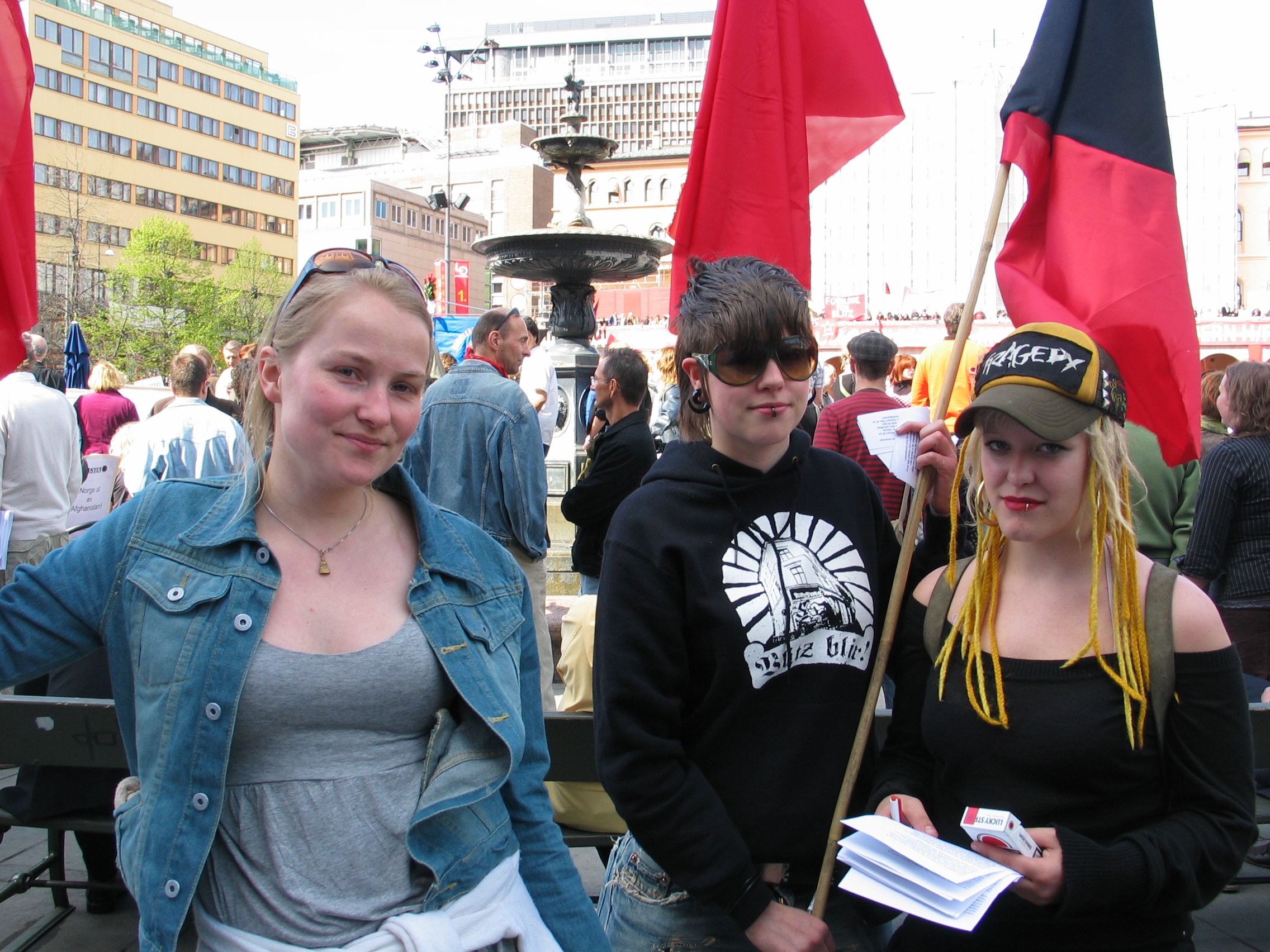
Buy a youthfil shirt to show you support the GDR — well if it hadn’t collapsed some 19 years ago.
But now a report on some states in East and Western Germany by the research community “SUP-State” (the SUP was the Socialist Unity Party, the ruling party of East Germany) at the Free University of Berlin (FUB) shows that views amongst students in East Germany on the GDR are more positive than what they had expected. It appears that the selection of informants the Austrian girl and I had made was skewed.
No, it’s not that I don’t have a life and that I only write about and am concerned with issues relating to the usually very far away Danish minority in Germany and its mother country. While I have not been blogging for several months, I moved to Hackney in north eastern London with Petra (false name), who I met in Oaxaca (see posts from about a year ago) and I started MPhil/PhD studies at Goldsmiths College — quite a radicalizing change from the University of Oslo. In October, the print edition of the Norwegian Dagbladet also had a piece on me coordinating activists from Norway and Germany to come to a demonstration for the youth house Ungdomshuset in Copenhagen, while I was situated in Århus. I wrote notes in online communities such as Facebook.com and Underskog.no — one of my Norwegian comments on the current political situation in Denmark in Norwegian was translated to Danish by Espen Stegger Ledaal — and I supplied Katie, with whom I had been traveling in Central America, with enough data on the Danish welfare state model for a group presentation as part of her social woks master degree, that her professor said she was very lucky to have “a significant other” from Denmark… So yeah, I sure have been active, although I stopped writing here for a while.
It is actually quite easy to record patterns of behavior of those around me here, but they are anarchists and so a bit paranoid of having their stories published all over the Internet. Also there were some events in the last few months that were so close to me that I would be afraid of putting them out for everyone to see. So you will have to wait until I go somewhere else — like Nicaragua some time this spring/summer.
Nevertheless, every now and then I find the time to scan through the Danish minority paper Flensborg Avis.
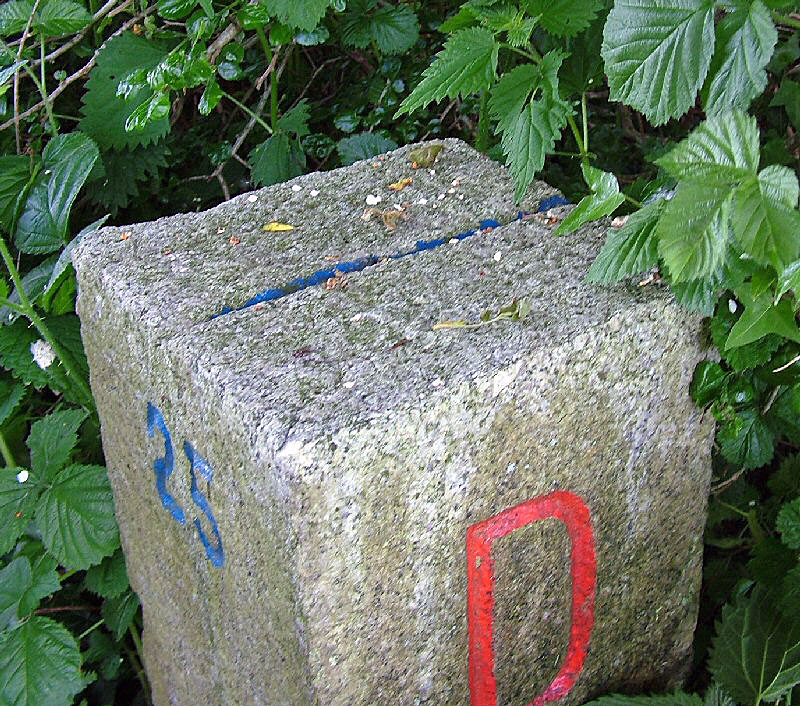
The physical border line between Denmark and Germany consists of no more than symbolical markers in 2007. Nevertheless, maintaining “Danish culture” is still important to some.
The last year has really been quite a rush for me. Actually the last few ones have been. When I dropped by my parents last sumemr some time and just shot this mini-docu, it was in-between a million other things and I had to leave to Oslo the day after. I had never expected that it would take me so much time and that it would be stretched out over so long to finally get it fixed to where it is viewable. But finally this week, before going to London on Wednesday, I had some time at my parents’ computers, where it has been sitting for all that time. So if you have not seen it yet or did not understand much of it due to subtitle problems, now is he time.
It all started in the middle of the Afghanistan campaign: The same group of Afghan refugees that had hunger struck in front of Oslo Domkirke last summer now arranged a 650km march from Trondheim back to Oslo. The point was to get media coverage in order to stop Norway from deporting people to their war-torn country. I had just arrived a day or two earlier from the G8 summit in Heiligendamm when they arrived in Oslo. A few hundred supporters showed up when the 45 young men who had done the walk arrived at the outskirts of Oslo and walked the last kilometer or so with together them. The final destination was the parliament building and the secret plan was to erect a tent during the speeches there, which would then stay in place, giving shelter to the camping Afghans. They would then stay until the police/government would take any concrete action.
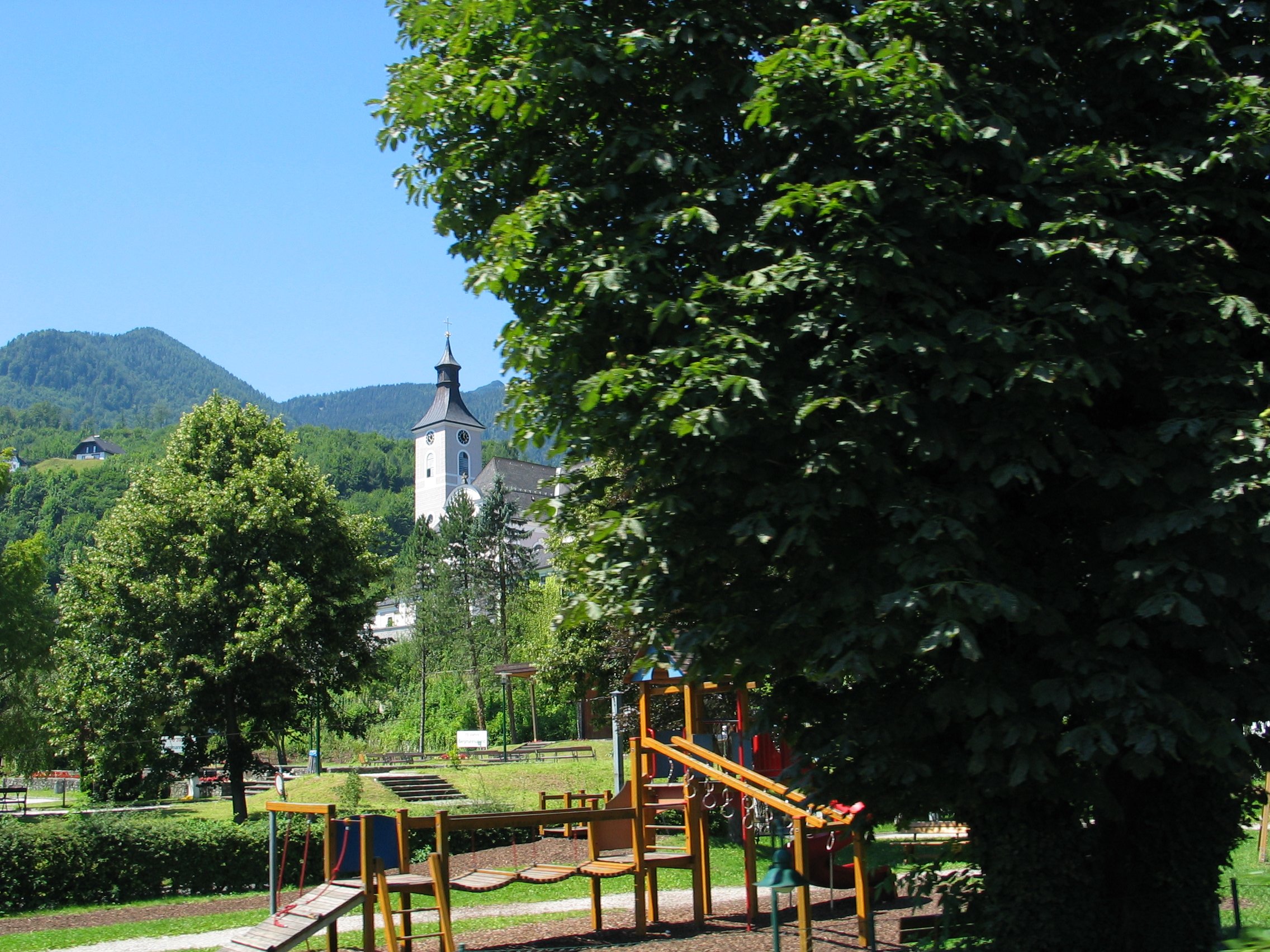
Austria — for real, this is what it looks like there!
This is the story on how I left from Oslo and that campaign and traveled 2000km to visit Marina Einböck, whom I had only seen a few hours in Panama half a year ago… (more…)
Some have asked for me to tell a bit more about what Rostock really was like. In some of the international media the G8 protests were completely ignored, and in for example the Norwegian media, the stone throwing on Saturday the 2nd were big time news with, as far as I understand, live pictures of riots being beamed to living rooms across the country. Also in Germany, stations such as N-TV showed the same two burned out cars from all angles at various stages of burning, making it look like there had been a whole line of cars that had been whole line of burned out cars. On top of that you had the number of 433 hurt police officers (status Sunday, 3rd). Sounds like civil war, huh?
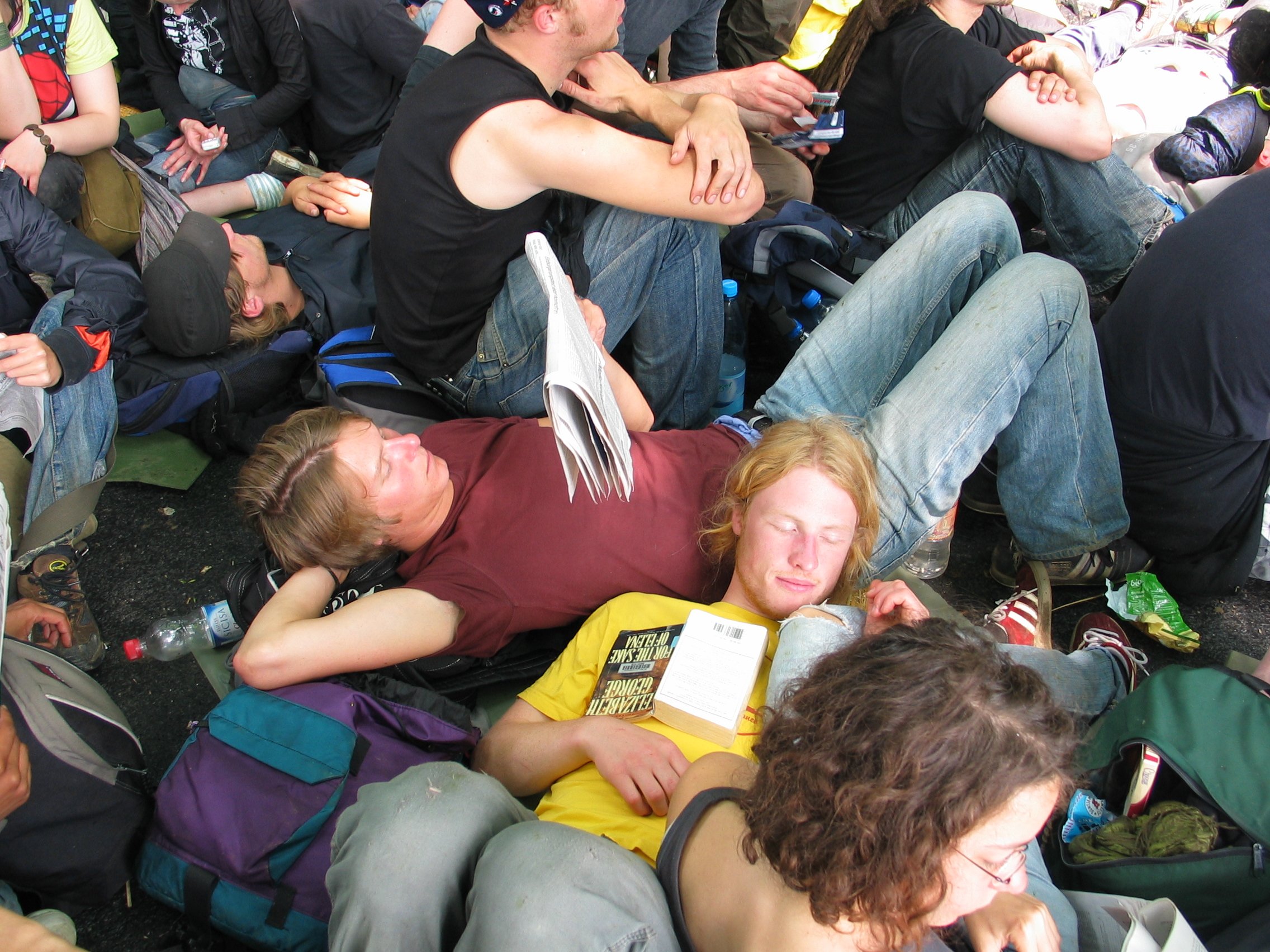
Well, on the ground it was not quite like that. For anyone reading this only to find action, I can tell you now already that I was never arrested nor hit by a water cannon. I was neither anywhere close to stones being thrown and I did I do anything that in itself, forgetting the special circumstances, would have been very exciting. Well, maybe. If sleeping on a street counts.
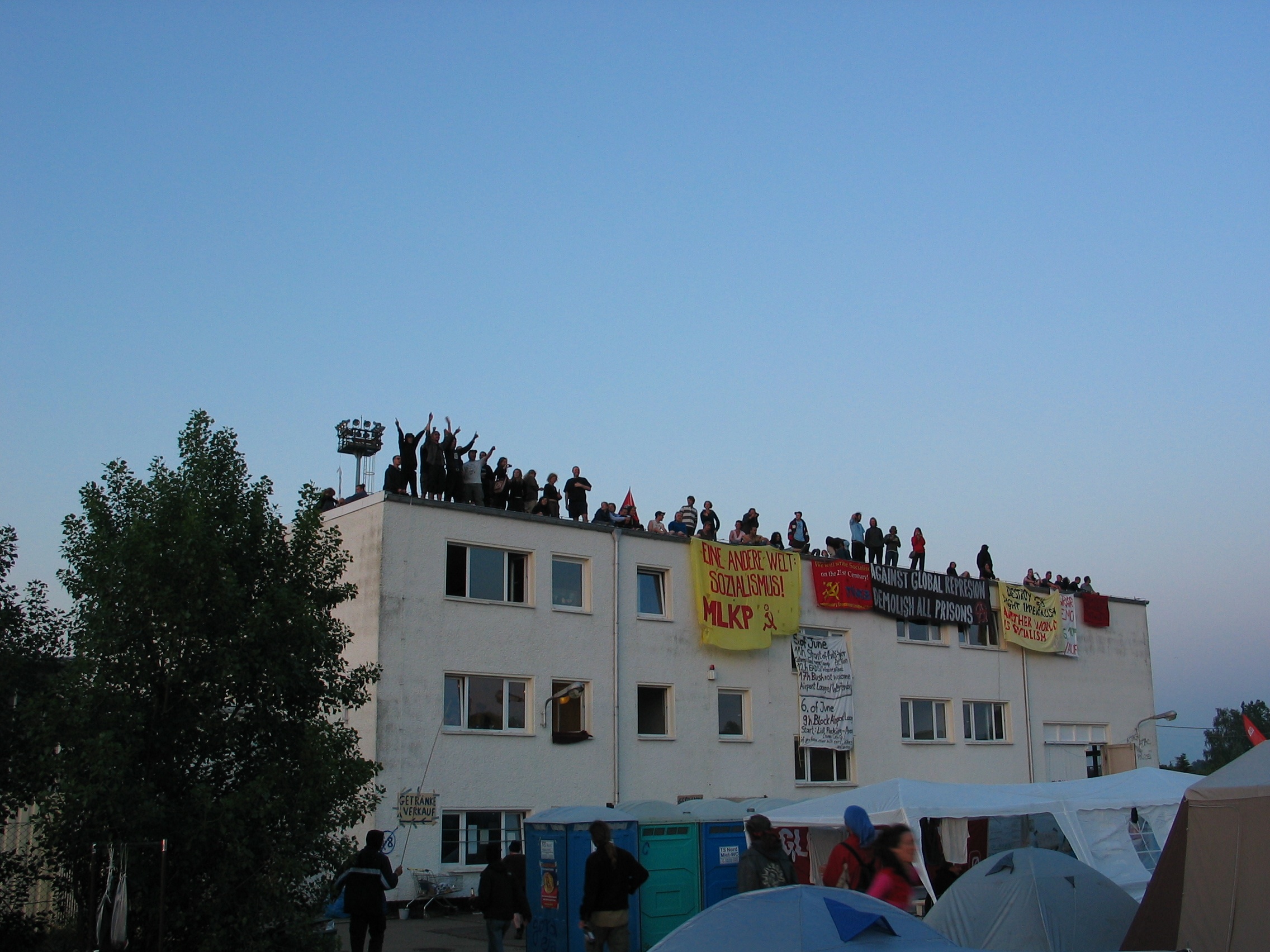
“This is what winners look like!” activists shouting and celebrating after 48h of blockades
On the 6-8th of June 2007, Germany hosted the annual G8 meeting in Heiligendamm. For many of the academic-intellectual organizations that came into life with the advent of the globalization-from-below movement around Seattle 1999 or who are older but have redefined themselves as being part of the movement, this was planned to be just another meeting space. Almost all the Norwegians who came down (I was on a bus with around 50 and we arrived in Rostock, the closest bigger city, on the morning of the 2nd) were here for a big demonstration some days before the meeting started, and those few who stayed for the time of the actual summit were to participate in an “anti-summit” in Rostock during the summit. Now there have been loads such summits over the last few years, and they have a few things in common: all the main speakers speak within some post-Marxist framework, preferably the speakers argue for applying some kind of wonder tax which would magically transform this world back to the early eighties, and no-one ever has any real proposal on what to do to exert power. Even in times when countries go to war with over 90% of their population being against it, there is somehow this strange notion in these conferences that everything will be good if only one speaks and demonstrates. A perfect example thereof is Mr. Peter Wahl of the coordinating group of German Attac, who tried to convince everybody to just sit down in front of the first line of policemen.
However, in Germany things were somewhat different. 10,000 activists ended up blocking all entrance ways to the conference center physically for hours on end and made all transport in and out of the center at times impossible at other times very dangerous. The fence around the whole thing that cost around 15 million USD and security was supposed to be on top; 16400 police from all over the country and an unknown amount of the army had coordinated for months and months in order to keep demonstrators at least 200m away from the fence. Some politicians had even talked about using the special anti terror unit GSG9 and equip police with rubber bullets in order to keep them away from the fence.
April 26th to 27th 2007, Oslo hosted the annual informal NATO summit which was accompanied with a series of protests. I will try to give you an overview of the events surrounding these days from the perspective of an Oslo activist. This is the second part.
One factor in the special way the Norwegian left is handled is the huge amount of media attention it gets — and that is of the positive kind. I believe it is fair to say that the vast majority of the non-parliamentary left, or those who are active in parliaments but do not believe much in parliaments’ abilities to fundamentally change society, there is _one_ common strategy on how to change government policy:
Make your case known in the media -> your proposal gains popular support -> politicians react to opinion polls and more parties are willing to adopt a stance closer to your’s -> the government implements a law or a policy that encompasses what you wanted.
Blitz and Attac: although style and methods differ, goal and strategy are in reality the same.
Generally the entire anti-capitalist left agrees on most issues. In this case it would be for Norway to pull out of NATO, for NATO to be shut down, and for all NATO (Norwegian and from other countries) soldiers to be pulled out of Afghanistan as fast as possible. So there is not really a difference in the amount of radicalism among us. However, some groups have to consider other groups outside the anti-capitalist left and they therefore moderate what they can ask for. One example is the left of the Socialist Left Party which, although itself through and through anti-capitalist, has to consider the right in the party, which is social liberal and does not understand much of the ideas of the anti-capitalist left. Other major considerations are how radical ideas one wants to gain support for can be, whether one should prioritize a long-term perspective of changing society fundamentally or a short-term perspective of changing one tiny bit of society, and what kind of measures to gain media attention are productive.
April 26th to 27th 2007, Oslo hosted the annual informal NATO summit which was accompanied with a series of protests. I will try to give you an overview of the events surrounding these days from the perspective of an Oslo activist. This is the first part.
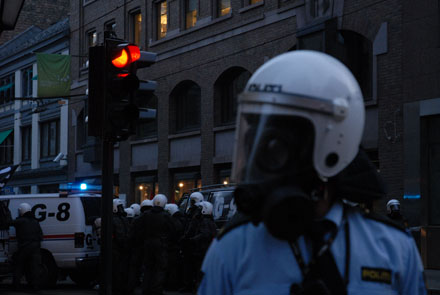
The protests around the NATO summit would end with confrontations between protesters and demonstrators. (Photo: spisderike.net)
Friday April 20th, I was on my way to Bergen for the national council meeting of Pedagogstudentene to represent the University of Oslo, when my phone rang as I was passing through security control. “This is XX from the Norwegian Ministry of Foreign Affairs […] We were wondering if you were showing up on the meeting on Monday?” What were they talking about? Why would I, just a simple student without any offices be asked to show up at the Ministry of Foreign Affairs? “It’s a meeting on the NATO summit later on next week, we sent you an invitation…” OK, I got it. This must have had something to do with my previous involvement with Blindern Fred. Since I started coordinating the group fall 2004, never more than about 4-5 activists at any given time had been involved with the group at any given time. It was tiny. But we had quite a few successes in setting the agenda by getting media attention on various issues. When I had left for the Americas, the group had pretty much dissolved. Only one older employee of the meteorological faculty, Rolf Solvang, continued running the organization in his less activist style, by for example arranging a debate on “Norwegian media’s role in war” (Wednesday this week).
But now Blindern Fred somehow was considered an organization that the Ministry of Foreign Affairs needed to talk to before they could hold a NATO summit. Nice!
Friday last week I finally graduated from the English teacher course I talked about last time. For four weeks I had been stuck in Barcelona, practically having no time for anything else than sitting at “input sessions” in the morning, teaching practices in the early afternoon, guided lesson preparation before and after that for a few hours, and whatever waking time was left was normally spent on preparing various bureaucratic forms that had to be handed in before every lesson — supposedly to show that one has thought about possible questions students might come up with. However, in reality it was more about not leaving spaces anywhere in the forms. Initially, I filled the forms out by computer. Of course, that meant that large parts were left blank and my tutors pointed out that I should write more. I was too naive to understand that what they actually meant was: “Make the form somehow look filled out, it really doesn’t matter what you put there.” Some of my female co-students (we were 10 girls and two boys)were more openly cynical though, and sure enough, following their advice and filling out the forms by hand meant that my tutors henceforth would accept my forms. It was only one part, the so-called “MFP-sheet” (meaning, form, pronunciation), which I continued to hand in as a computer print out for a while longer, and just as long did they complain about it. Also, we had three different tutors, one after the other for 6-7 days each, and they all had their own personal way of filling out these forms. Of course, if you’d fill any form the way one of the other two tutors did it and had taught it to us all in an input session, it would be marked as wrong. Especially for the girls though, this seemed to be perfectly natural, and none of them were great revolutionaries. Somehow also I ended up surviving four weeks of that, and in two months time my Cambridge Certificate in English Language Teaching to Adults (Celta) should arrive at my parents by mail.
In Barcelona I had only had very little time though, so all the activism activity I attended was the 8th of March (world women’s day), an antiwar march on the 17th, and I visited an occupied house a Friday afternoon which I had bumped into while walking to the post office.
So when my time was up on Friday and I had to give up my room on Saturday, I finally got to book a flight back up north. Due to the excessive Easter celebrations all over Spain which are a great tourist attraction, I did not even try to find anything from Spain itself. Instead I found a flight from Marseille, in southern France. The only problem: It wouldn’t leave before Wednesday. From Barcelona to Marseille you can travel within just a few hours of TGV ride, so I had some extra time on my hand. Combining my memories of German national romantic tales, which usually included going to Italy to walk from village to village and become involved in the life of the locals, with my my fascinations for Eric Balir’s Homage to Catalonia and Down and Out in Paris and London, I decided to travel slow and by moving out of the pattern of normal ways of traveling.
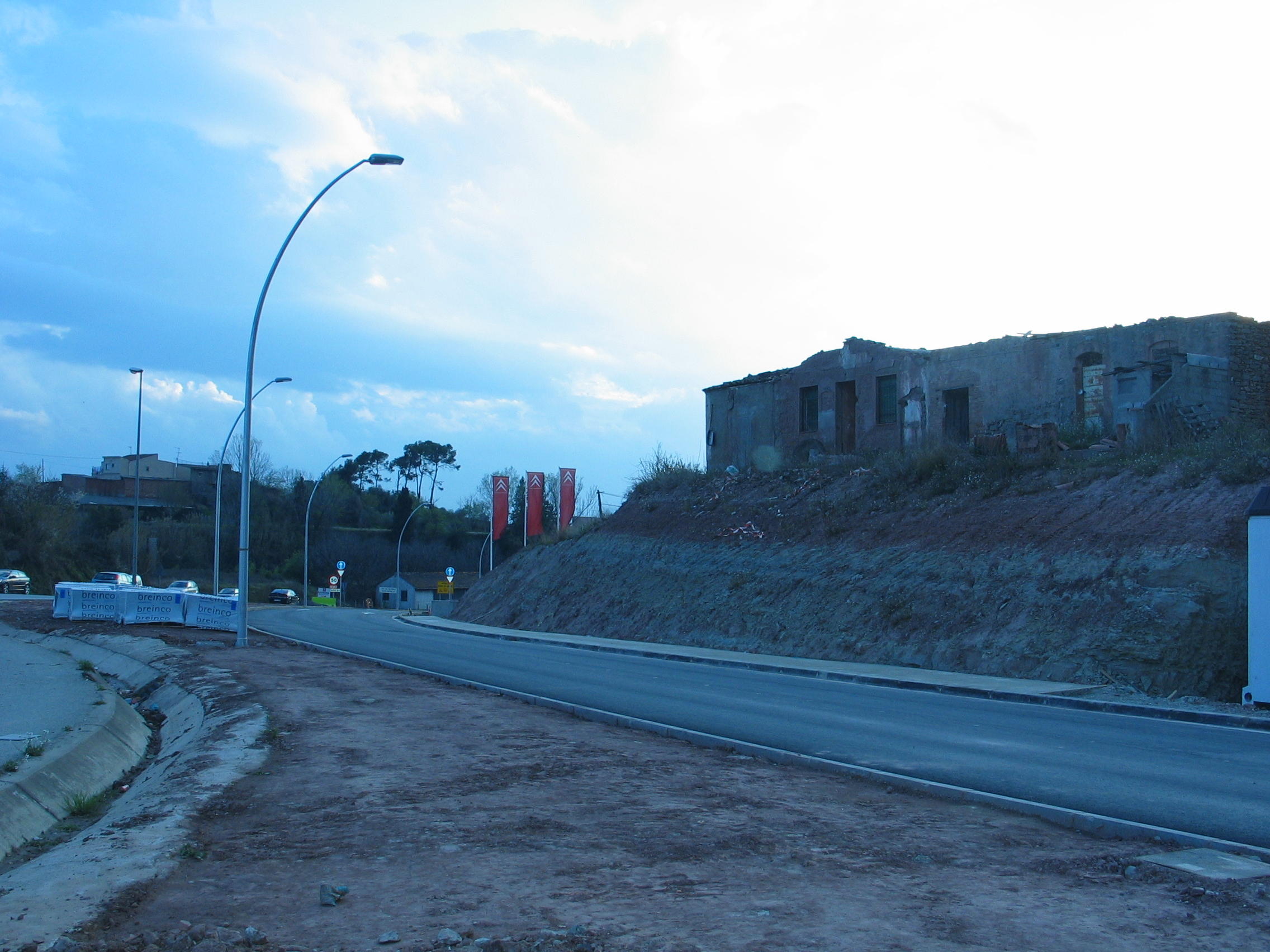
My home the first night provided me shelter from the rain…
This is my journal of a few days of shifting form the very structured environment I had experienced in Barcelona through a few others, some touristy, one activist, one Norwegian and everything between them very much out of the ordinary.
On my way to Barcelona, Spain, where I am currently trying to acquire the entrance ticket to the cultural imperialist English teaching industry by taking a four week high intensive course in English grammar fascism, I was passing through London and stayed there for a little under a week. Anyone who has been using the low cost airlines to get around Europe that have come about earlier this century will be familiar with being stuck in London, or at least Stansted airport. I was not quite in that situation this time, instead having a bit more time and a few radical meetings and some interviews on my schedule.
And somehow I ended up in a sector of the world working class that I had only known from books previously.
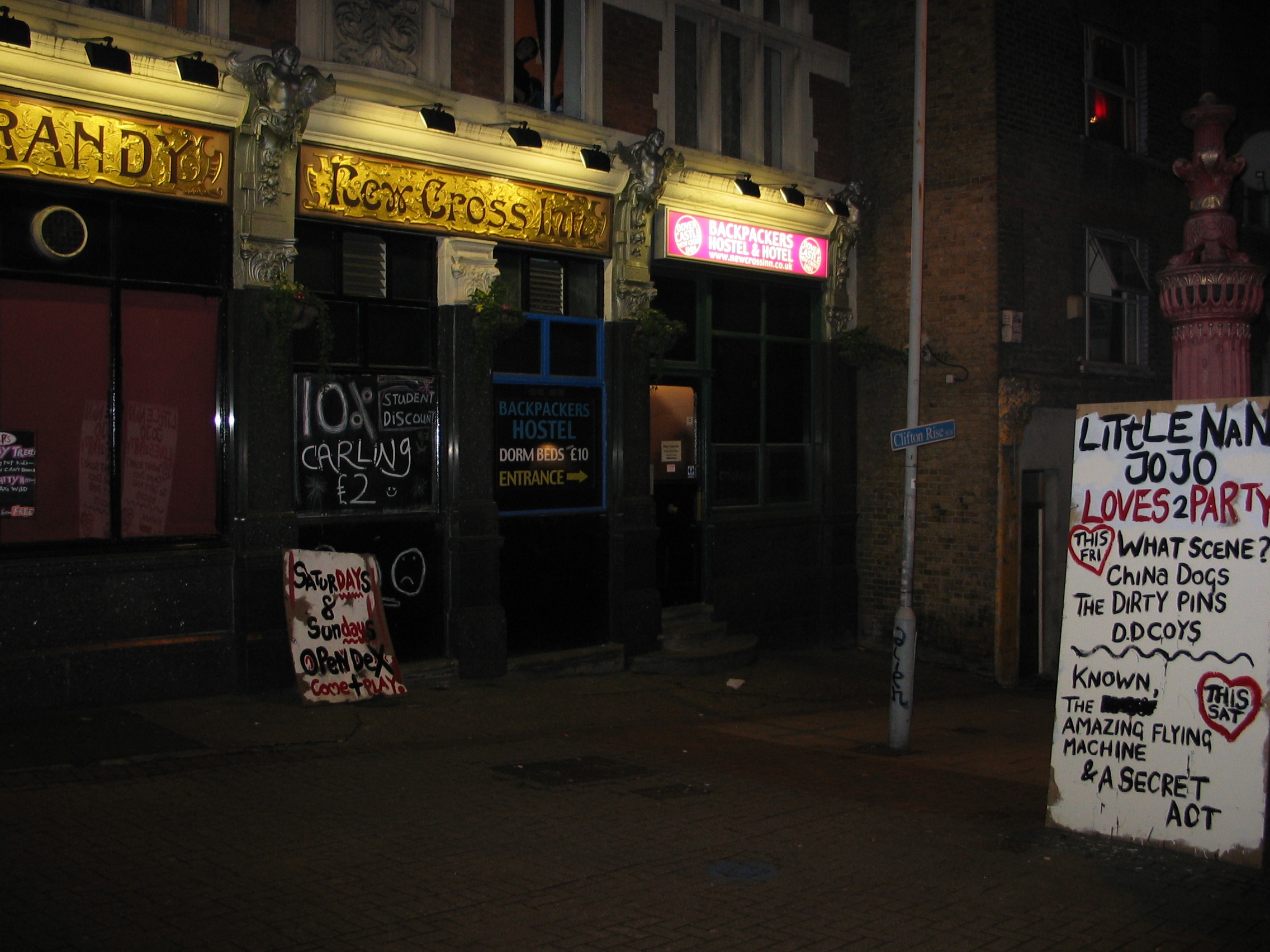
Our site is the New Cross Inn in South Eastern London. When I arrived, at first glance the youngsters there looked like the backpackers who had stayed at the youth hostels in Central America and Mexico. So when I went to the “common room,” being all occupied typing away on my laptop, and some of the others asked me to participate in what i thought was a game, I felt obliged to socialize at least a little with this “party crowd.”
The “game” involved balloons that they blew up with gas and then sucked the air out of them. I thought that the point was that they would fill them with helium and then breath it in to give themselves Mickey Mouse voices. At least in my concept of kids birthdays, that is generally a central part.
New Cross Inn — the people who live here rarely have the means to participate in the parties downstairs.
But that was not what was going on. It was not before I was about 3/4 through my balloon that I realized that we were doing drugs. I know, I am really naive about narcotics, and breathing in the gas from a cream whipper is neither forbidden nor all that strong, but I just had no idea.