Upon returning to Europe I notice how little actually has changed here. It seems as if the whole continent just took a break while I was gone and started right back up with me. Here in Norway I witnessed a pre-seminar for this years national convention of the teacher’s union’s student group and as always, it was an (overly) consensus-driven milieu. Although the average member probably has opinions spread, but somewhat left of the center, it is hard to make out much of any exact political differences.
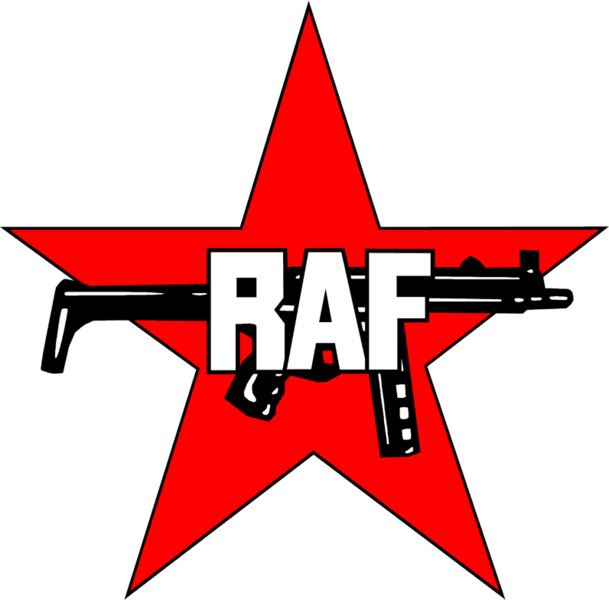
Rote Armee Fraktion (RAF) — radical West German group that wasn’t shy of violence.
So finally my time ran out, and I would have to return to Douglas for about 5 days to log off from the Americas before taking the plane back to Europe. So I flew from Panama city to Hermosillo, Sonora, Mexico and took a night bus up to the border.
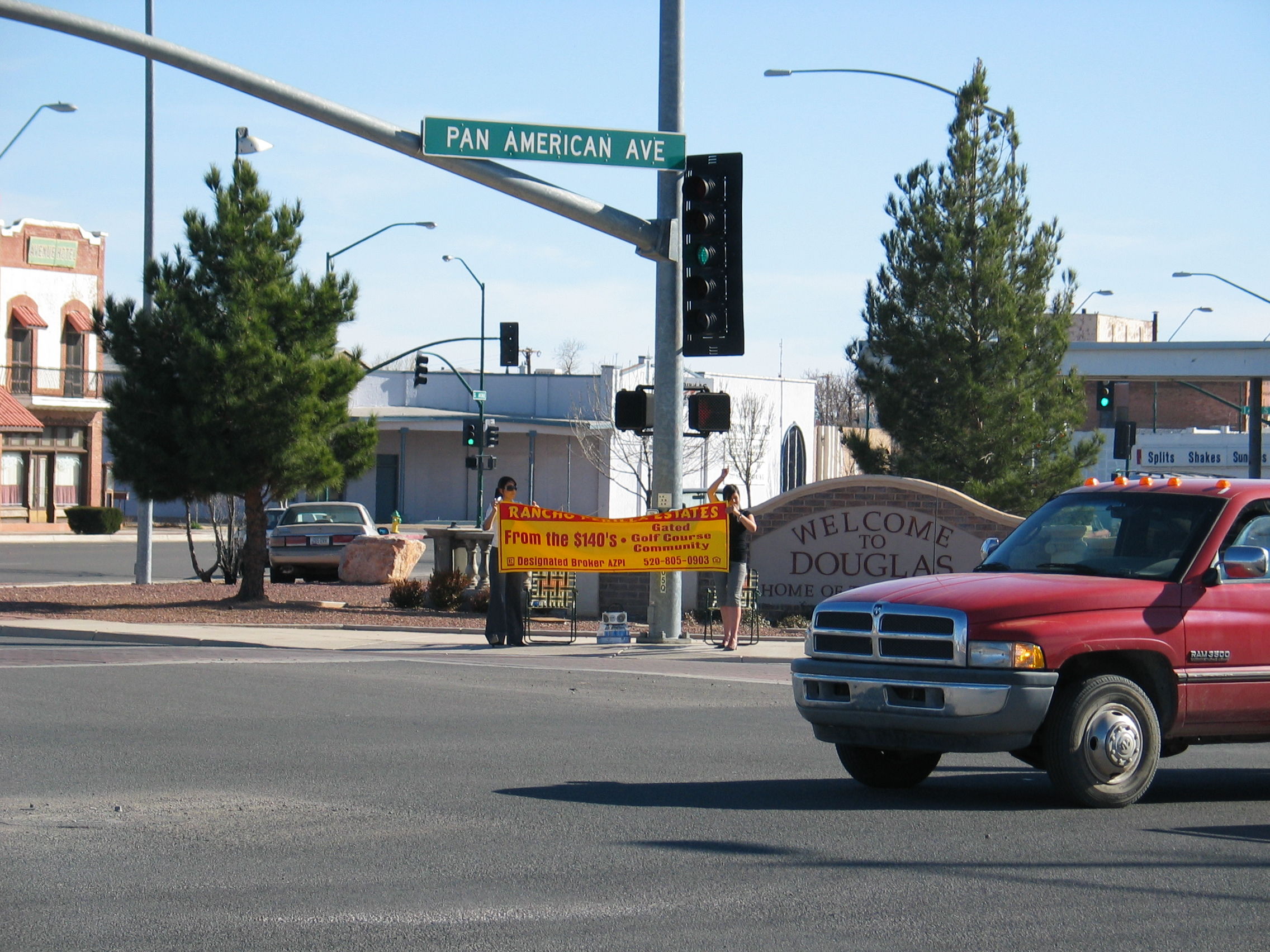
Two Douglasites are advertising for the gated community that they themselves are gated out of.
When going Douglas, one enters a kind of time less zone. And so also this time. I first met Blue at the Gadsden. “Oh so we’re you staying at now?” he asked. He had not noticed that I had left Douglas, just that I was no longer staying at the Lerman any more. I spoke Spanish with him, and he spoke Spanish with the waitress at the Gadsden in whose cafeteria we were sitting. But to me he constantly answered back in English. The status of Spanish is not the same n Douglas. A little while later Angel entered. He only speaks Spanish and so he had to use it with me. “I’m staying at no. 7,” he remarked. He expected that I would claim no. 8 now that I was in town. However, Mr. Fernandez had been run to the hospital with a heart attack and had stopped working at the hotel, so I would now have to go and trick me in through the office of some housing office. Therefore I stayed with the head librarian instead.
Some in Douglas had actually followed what was going on in Mexico, and the political allegiances were as I have grown to expect them: The pensioned, educated, white, US American, non Spanish speaking husband of the librarian had followed the Obrador campaign and what had happened all fall through his minimal understanding of the Mexican TV news. But in Sonora he had not fund anyone who would support Obrador.
Panama is my last destination before heading back to Douglas and from there to Europe. Although I have not had time enough to really get to know a lot of Central America, I guess it is time to go and get rid of my two backpacks — at least for a while.
The experience I want to share from Panama is for the first time more travel than politics related. I have experienced the same sort of things in other places, and I talking to some not so political friends and family, I know that it is somewhat out of the ordinary.
So here we go: Almost anywhere on the planet you as an activist might go, there is always and everywhere some kind of activist “community” that not only invites you and shows you around, but also one that has a number of reference points very similar to those you have yourself. Because of that, it is quite hard for me to say something like “the Panamanians are so and so” or “I really liked the warm culture of people in country X” — simply because I know that there are people with a world view quite similar to that which I hold, which generally puts them, but also me, at the fringes of society. Obviously, there are some exceptions — such as Douglas and most other areas far away from capitals and organized left wing politics. But those are very seldom regions that I see anything of anyway.
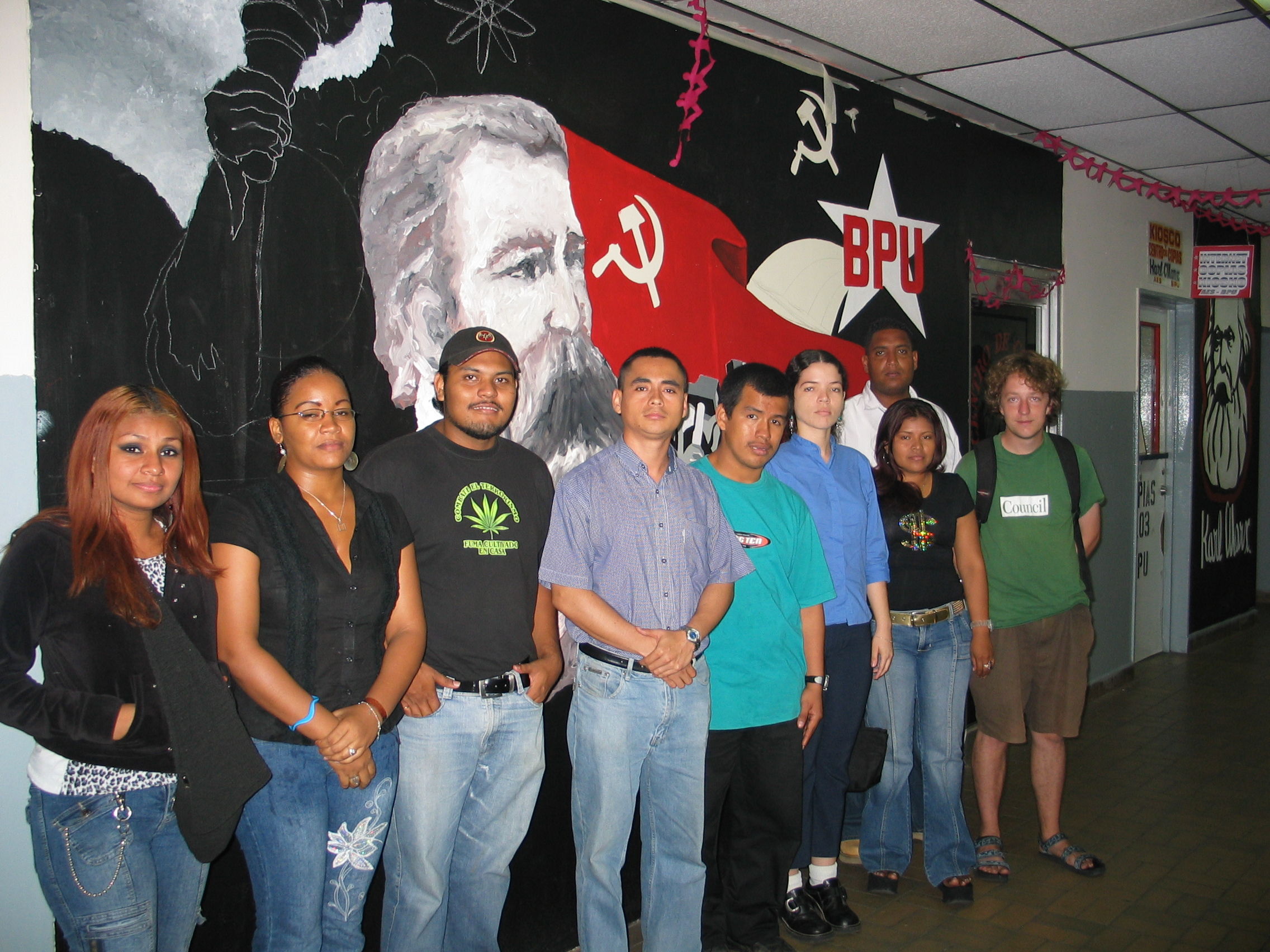
The BPU at the faculty of sociology at the University of Panama & Johannes & Engels
How does one effectively a national campaign to change how one’s country’s deputies vote on a certain issue when there seems to be a clear parliamentary majority established already? How radical does one have to be in order to actually change the outcome of the vote? How broad does one need to be in order to have any impact?
Such considerations, people active in social movements, need to make everywhere — and the different positions in the question seem to be awfully similar as well. Or at least those activists active in CAFTA protests I met here in Costa Rica had to discuss things very similar to what we activists in Europe often do.
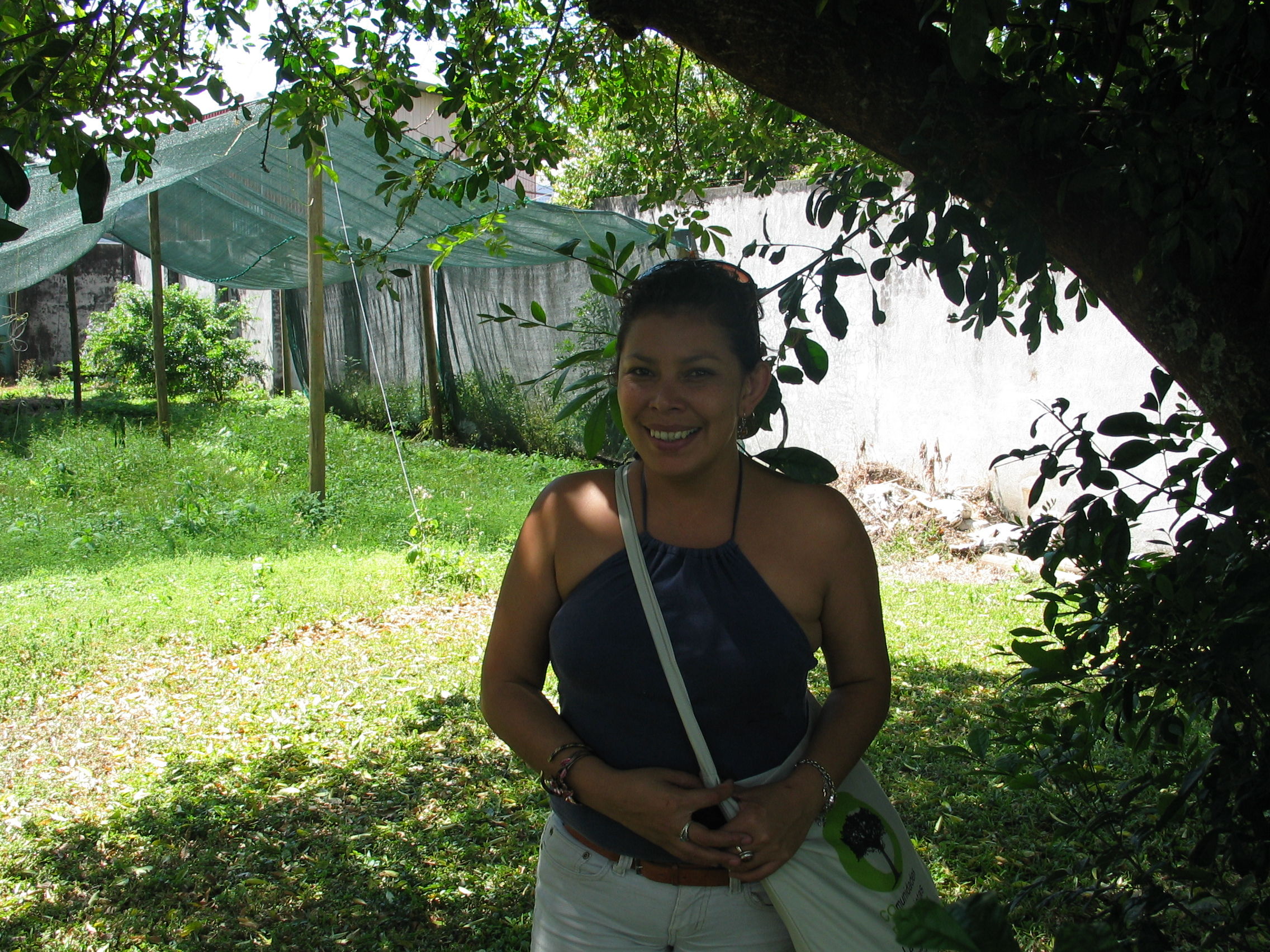
Grace García represents the eco movements in the national coordination committee against CAFTA.
Let me try to exemplify with the activists Grace García and Marcela Aguilar. Grace from Friends of the Earth Central America, has worked in the national coordination committee against CAFTA for the past year, but also the two preceding years she has been working against CAFTA. The ecologist movement is something I personally do not know very much from the Norwegian activist scene. Marcela is from the Socialist Party of the Workers (PST), and was one of the three I talked to last time. The PST is considered one of the more radical groups that also tend to be quite small. But they do get noticed, “like the black block in Germany” a German journalist Torge Loeding from the media group Voces Nuestras tells me.
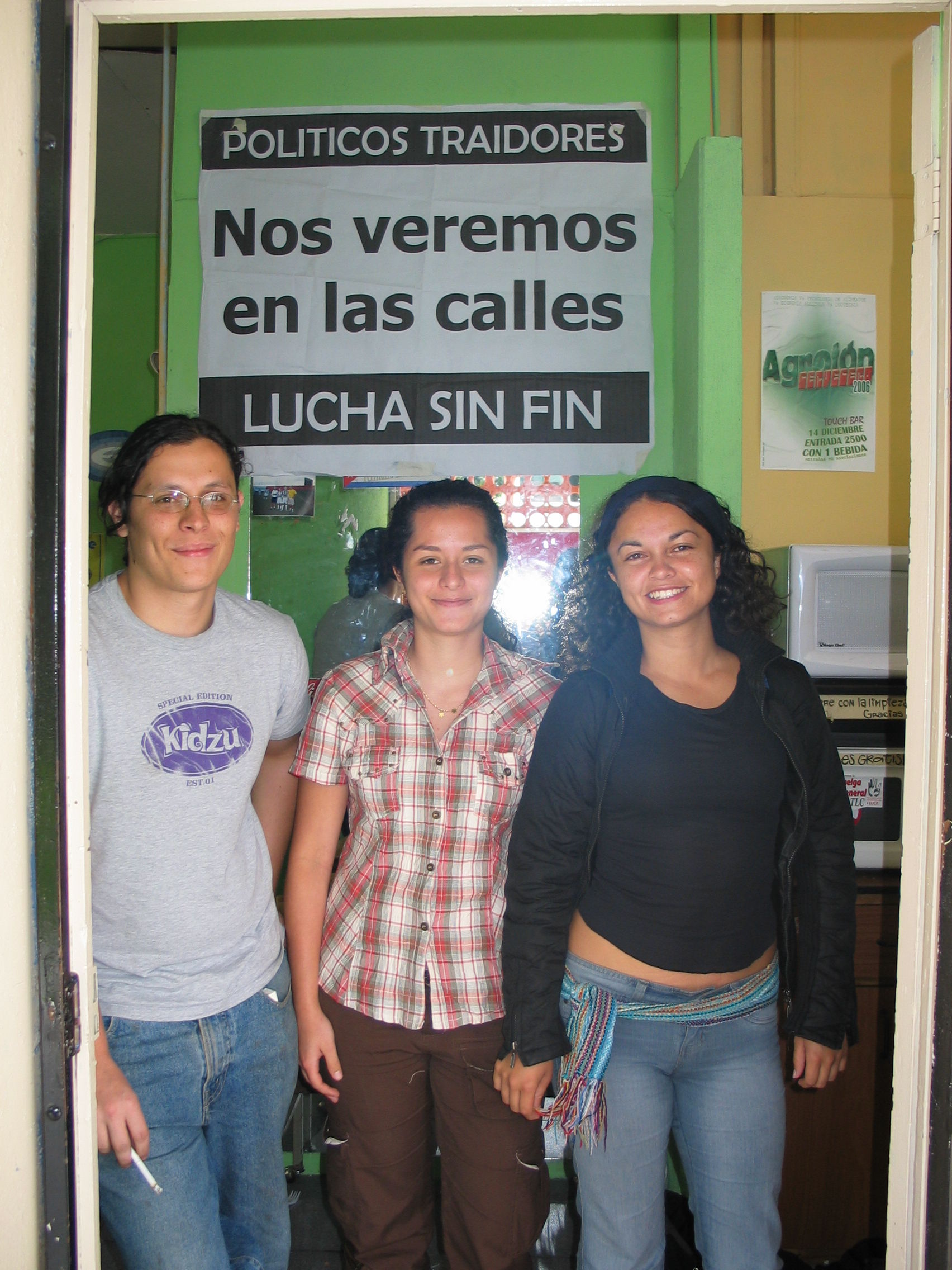
Students Isaac, Sofia and Marcela are working hard against Costa Rican membership in CAFTA.
After leaving Nicaragua southward, I bumped into Katie Niemeyer for the 4th time, this time walking down a high way In Liberia, and we decided to go to the town of Santa Cruz in northern Costa Rica, where there was to be some kind of cowboy festival. But because this seemed rather posh, we decided to go on to the capital, San Jose, yesterday, and at the bus station I saw a guy with a button saying “NO TLC.” TLC stands for Tratado de Libre Comercio — or the Central American Free Trade Agreement (CAFTA) in English. He told me a little about the campaign to keep Costa Rica out of the agreement, and ended up giving me the button.
Today, I decided to go to the University of Costa Rica, and try to find some more information about the campaign against CAFTA.
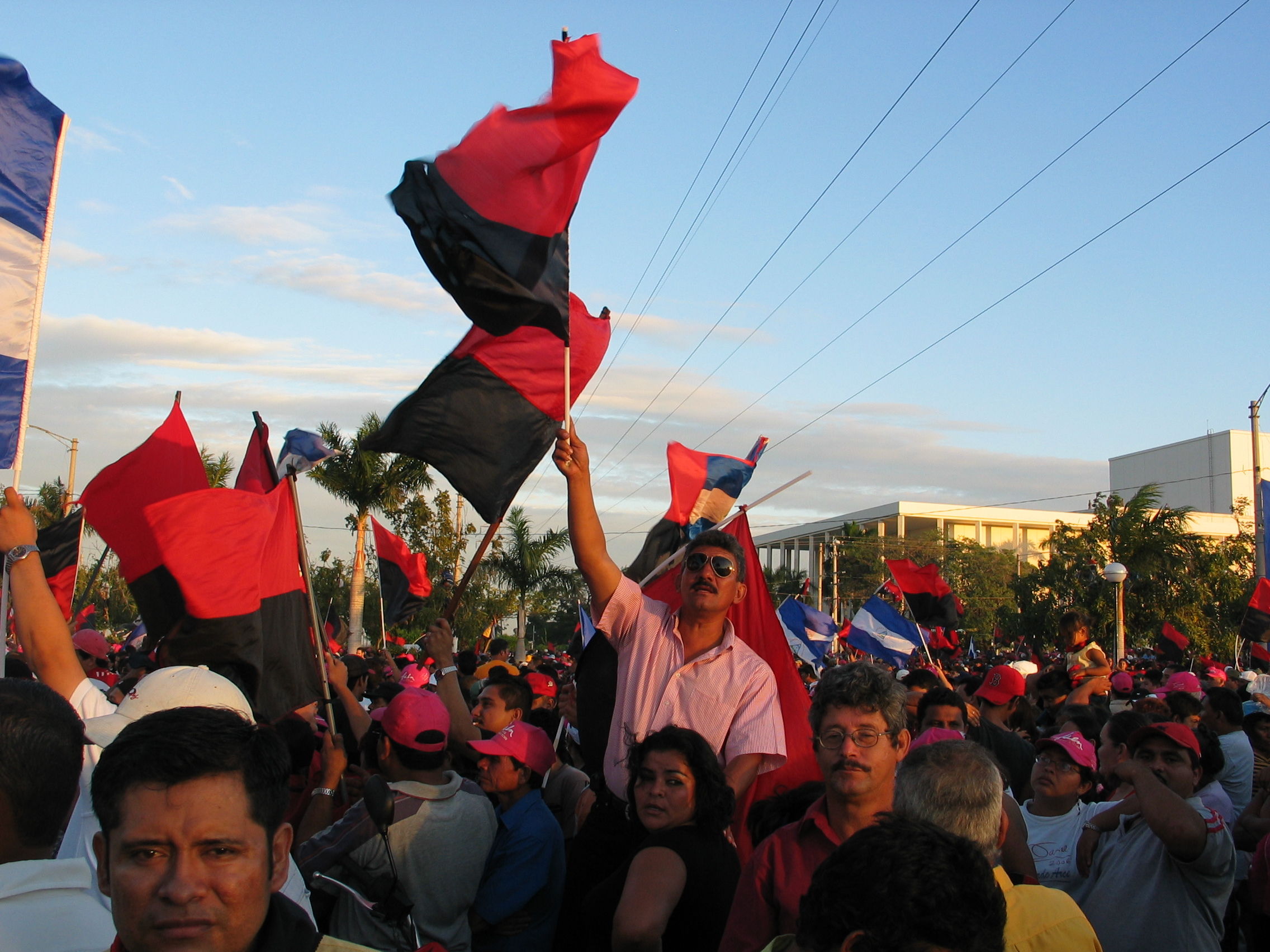
…or rather Chavez’ and Morales’ night. Fact is that the plaza were Ortega was to give his first public speech after inauguration was filled with cheering leftists while Chavez and Morales spoke, but when Ortega finally got to speak, everyone seemed to have better thing to do.
Sure, we had all been waiting three hours beyond the expected arrival of the 14 leaders of states (7PM rather than 4PM), and the way he spoke, it just seemed to be the beginning of a very long and tiresome discourse quite different from the political messages Chavez and Morales came with (Chavez: “Socialismo o Muerte”, Morales announcing the nationalization of the Bolivian mining industry), which made the crowd come alive.
In the crowd, waiting 3 hours for Chavez, Morales, Ortega…
However, Ortega did not just lack rhetoric and speech writing skills.
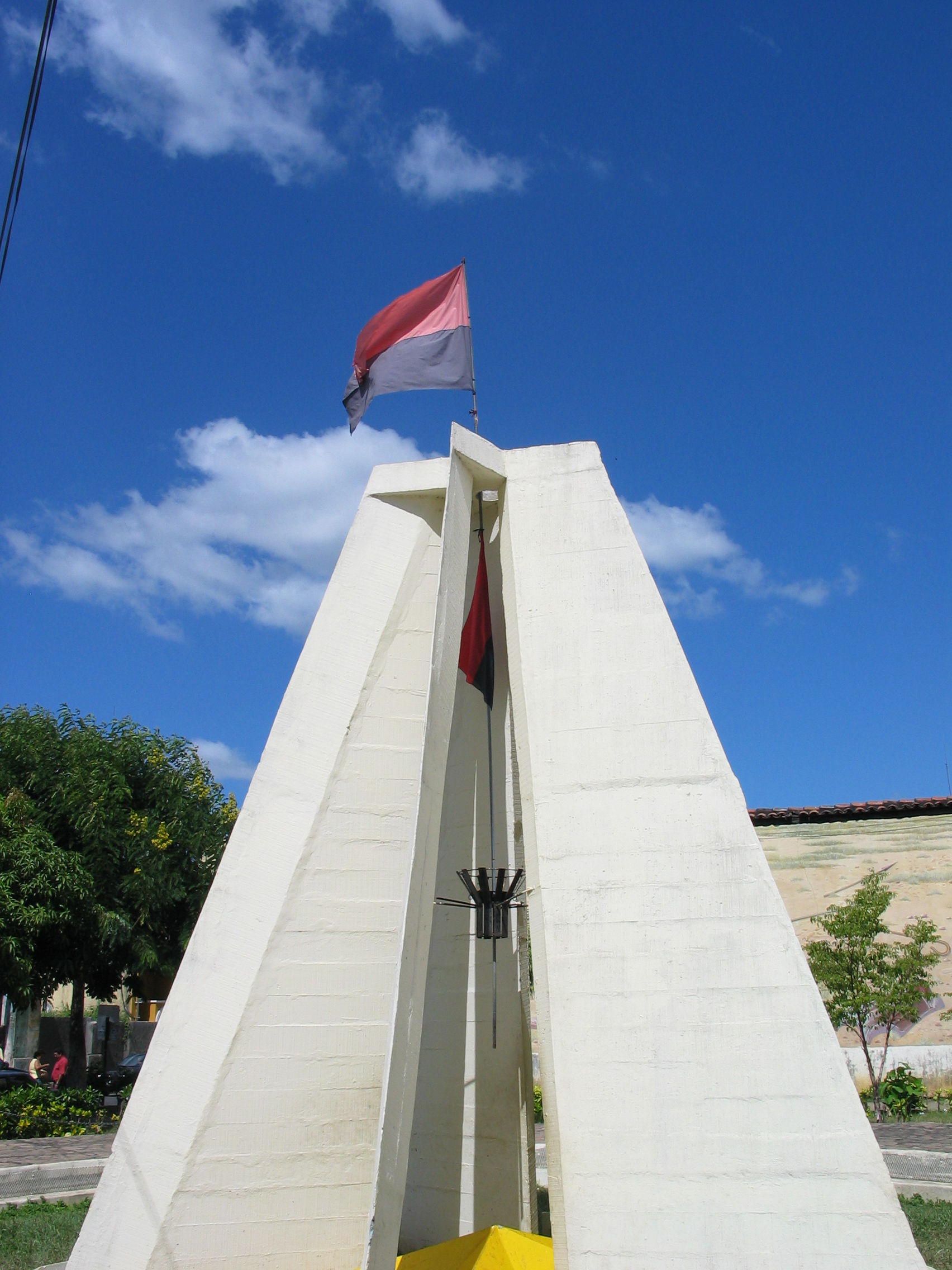
Nicaragua. After having traveled through northern Central America, it strikes me how little independent these countries actually are. Of course, there has always been the big imperialist empires Spain, Britain and in later years the United States, that have tried to steer them into whatever direction was convenient for them. But also the protest, the rebellion against the global exploitative system, is very much dependent on the strength of similar forces in other countries. Just take Nicaragua: The big hero national Augusto Cesar Sandino, who fought against United States forces in the 1930. The black-and-red anarchist flag that he introduced was brought from Mexico, where he had been working in the Petrol industry and had been awakened politically by the revolutionary Mexican communist and anarchist movements in Tampico.
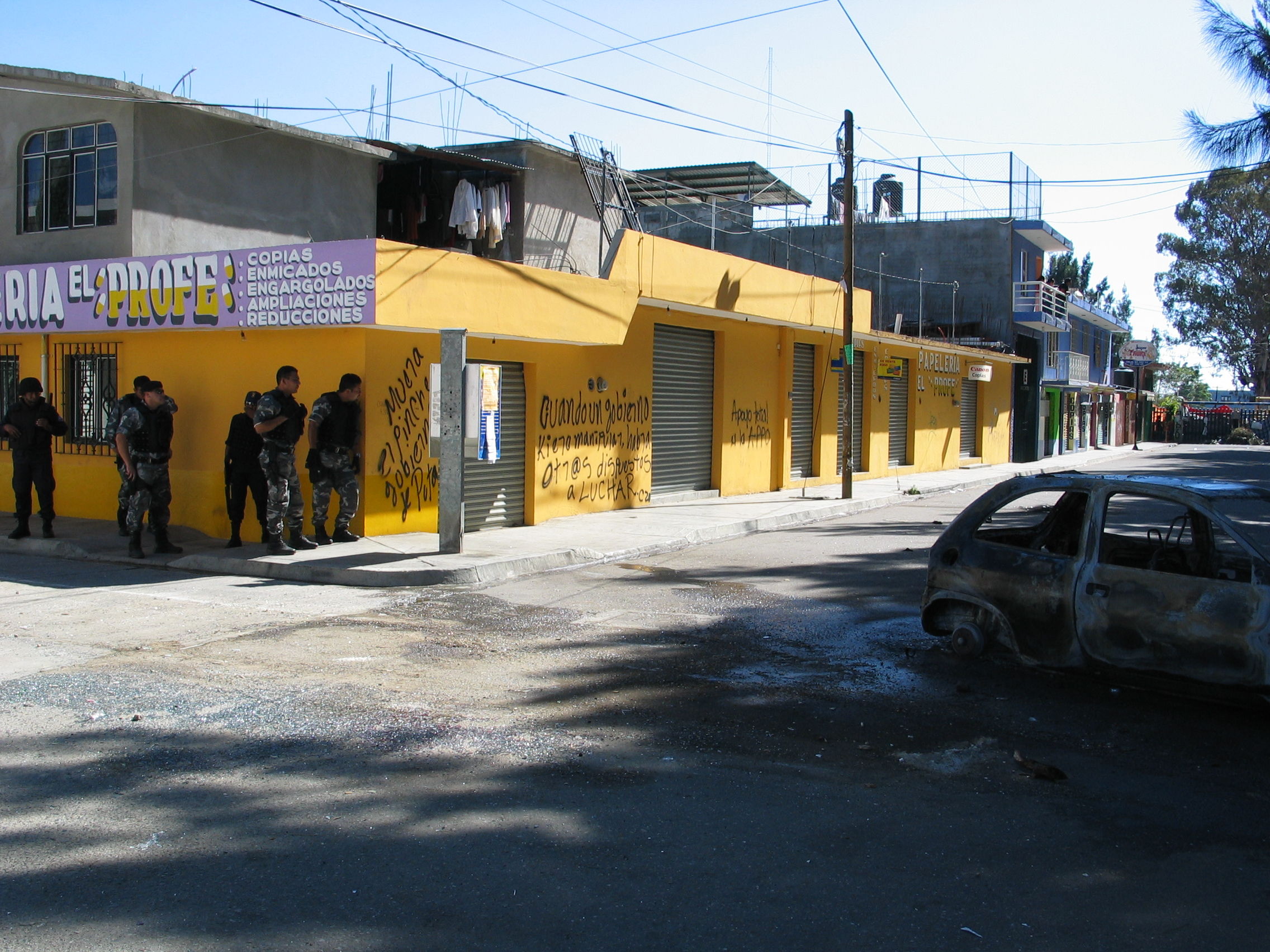
The following I first wrote in Norwegian, but then I met a Greek traveler who had been asked to write something about Oaxaca for a Greek magazine. However, because they did not let him in to the city (holding him in custody for not having a passport on him for a few days instead), he could not write anything about it and asked me whether I could send my article (for anyone having followed this blog all throughout the conflict, some of this stuff is the same over again.)…
Update: After a phone conversation with my parents it became clear that I have to add a note somewhere on the site that I often anonynomize the names of people I talk about, especially if not all they are doing is completely legal. And therefore: No, Petra is not German, although the name might sound like it.
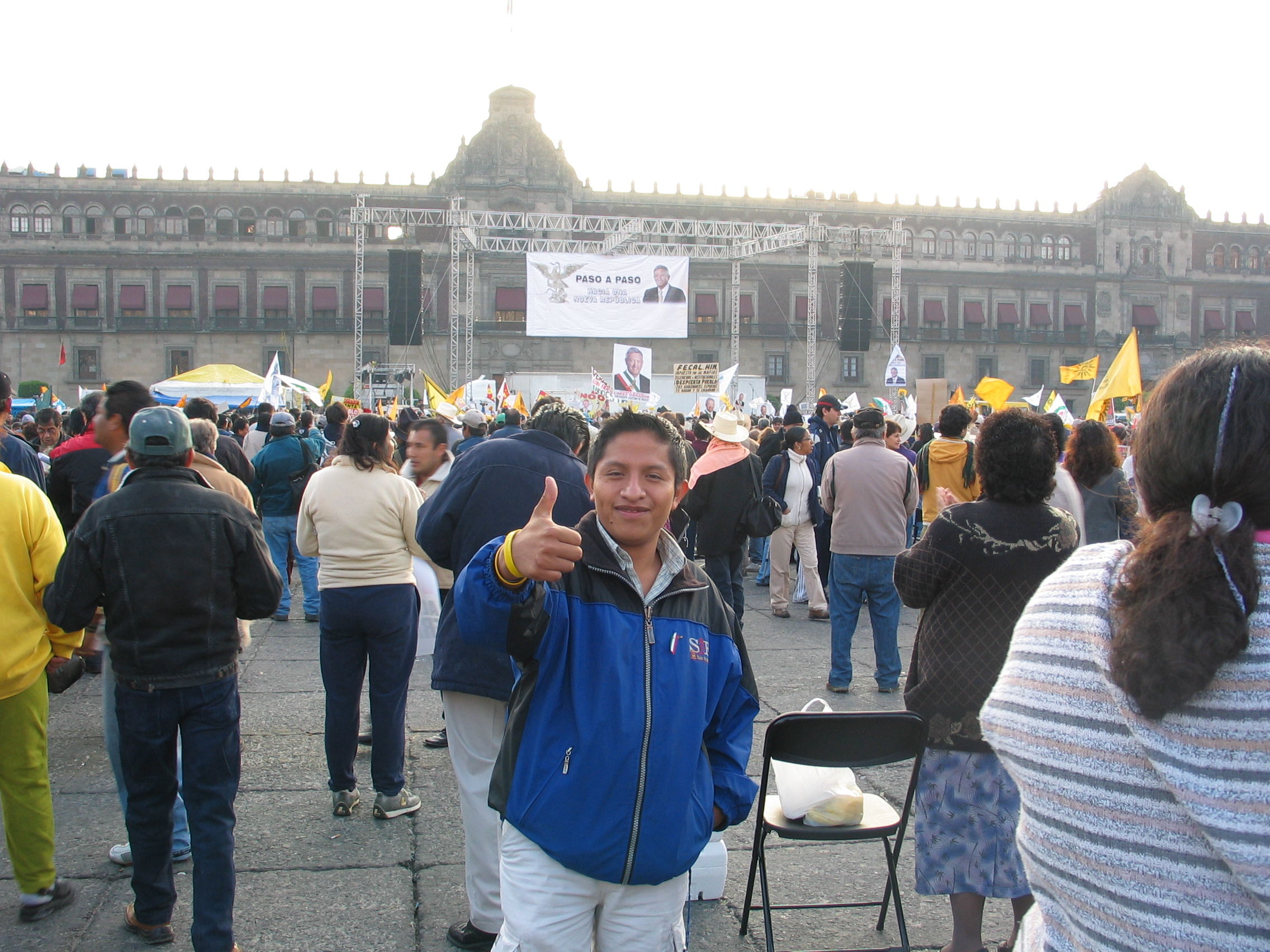
On the first of December, Mexico’s other president Felipe Calderon (FP) was inaugurated in a five minute ceremony after having slipped into a parliament through a hole in the wall. Previously, parliament had been occupied and blocked by members of the left wing coalition supporting Andrés Manuel López Obrador (AMLO) for three days, while members of Calderon’s National Action Party (PAN) also slept there in order to keep space free for FP and his ceremony. FP is the president who will actually be recognized by the Mexican military and the Mexican federal police (PFP) and, more importantly, the Pentagon.
Israel from Oaxaca (PRD) is still believing in AMLO.
Update: We managed to smuggle the punk rocker, who had been hiding at my youth hostel over night, on a second class bus to Mexico DF. There was just one police check point on the way, and they did not get suspicious when he said he was going to DF, while moaning and generally seeming disinterested in them.
The Federal Police (PFP) reaching the entrance of the Autonomous University of Oaxaca
As anyone who has been in any kind of confrontations of scale can witness, uncertainty and rumours tend to take over as sources of news, as newspapers are used mainly to distribute lies that are meant to support one or the other side. And although I have known that from various confrontations in Europe, it never reached the intensity it has here.
In the last this has only grown. The events of Saturday scared most foreigners away from the university, and the camp in front of Santa Domingo was permanently destroyed. Effectively that has meant that foreign news CAN NOT have any real source of news, and whatever you read in them MUST BE made up or copied from those Mexican papers who have a part in the conflict themselves (La Jornada probably being the best source nevertheless).
Three of us stayed until the end though, and because the others do not write, this should be the last (foreign) report from the university camp. (more…)